

Fine line tattoos: what they are, ideas, and everything you need to know

In recent years, the fine line technique has become one of the most requested styles in tattoo studios. It’s particularly popular among those looking for small, discreet tattoos with a minimalist aesthetic, as well as first-timers wanting something delicate that seamlessly fits into their daily lives.
It’s not just about looks; it’s about how many people now view tattoos as something deeply personal. Its rise in popularity is due to several factors, including:
- A general trend toward minimalism (in fashion, design, and art).
- The influence of social media and visual inspiration.
- A growing demand for discreet and elegant tattoos.
- A shift in client profiles: more reflection, less impulsiveness.
Additionally, more people are seeing tattoos as a long-term aesthetic choice rather than just something meant to be shocking in the moment.
In fact, the fine line style is exactly what inspired me to open “Grisáceos Ink,” my own studio in Valencia specializing in fine line technique.
But what exactly is fine line? How does it differ from other styles? Why do people say it ages better when done correctly? And, most importantly, is this style right for you?
In this article, based on my daily experience at the studio, you’ll find a complete guide to understanding fine line before making your decision.
What is the fine line tattoo technique?
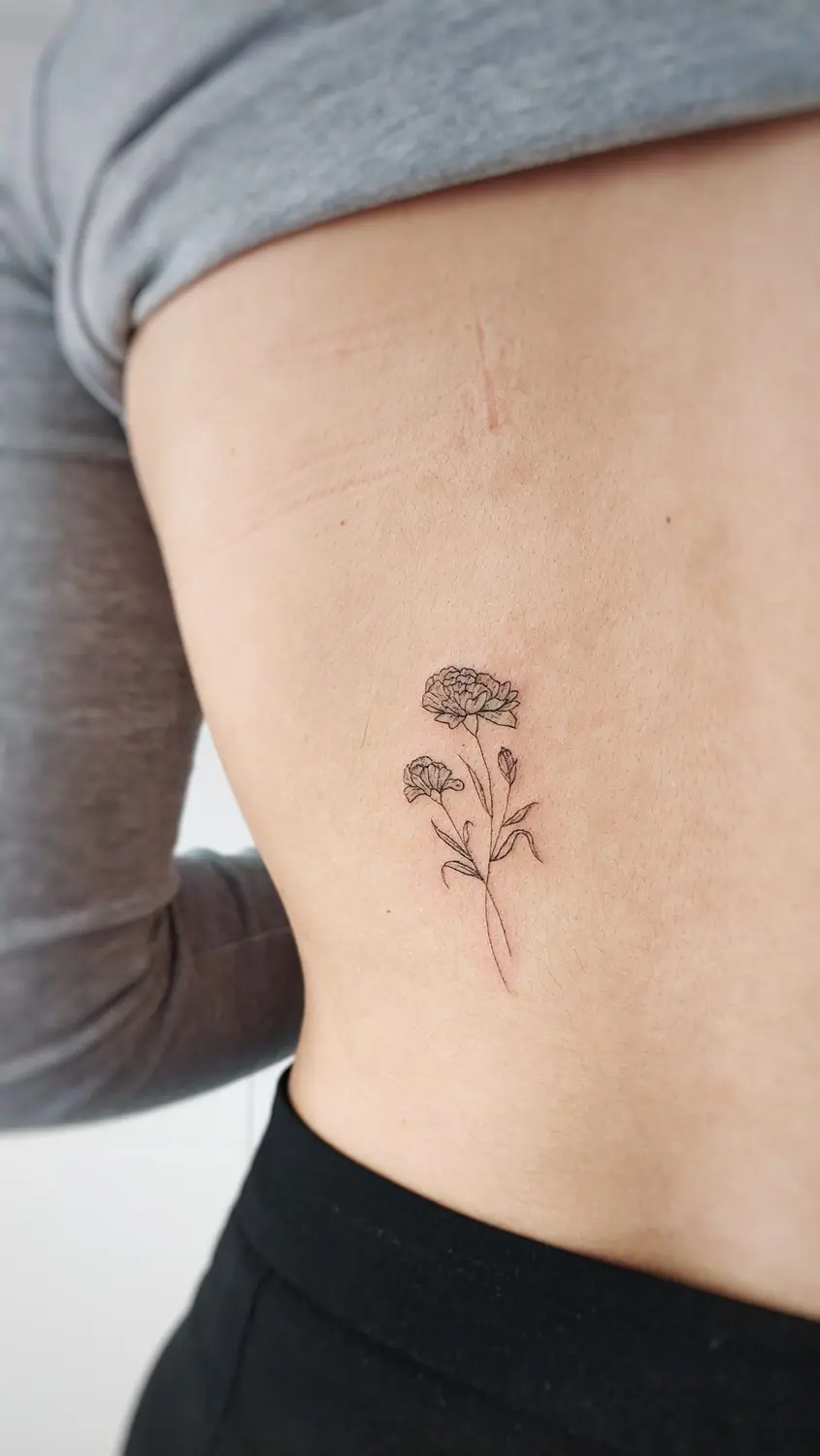
Fine line is a technique based on working with incredibly delicate and precise strokes. By using smaller needles than usual, we achieve a finish that is clean, light, and visually soft.
Unlike more traditional styles where lines are thicker and bolder, the goal here isn’t for the tattoo to stand out through strength, but through subtlety. These are designs that blend with the skin, they don’t “feel heavy” to the eye and often go unnoticed until you take a closer look.
This is why the style is so closely linked to minimalist tattoos, tiny symbols, words, or simple designs that don’t need to be huge to make sense. Essentially, we want the tattoo to:
- Look light on the skin.
- Have an elegant finish.
- Avoid feeling visually “heavy.”
- Integrate naturally with your body.
It’s the perfect technique for those minimalist, small, and delicate pieces. Those tiny symbols or meaningful words that carry a lot of weight without needing a lot of space.

How are fine line tattoos done?
Even though the final result might look simple, the execution is anything but. Fine line work requires immense precision, steady hand control, and specific experience with these types of strokes.
We use thinner needles (known as 1RL or 3RL, or Round Liners, which are essential for precise lines). The “1” or “3” refers to the number of tiny needles grouped together; even if you can’t see it with the naked eye, tattoo needles are actually made of several tips bundled together.
Using these specific configurations allows us to create incredibly delicate lines, but it also means there’s zero room for error. Any slip-up is much more noticeable here because there’s no way to “hide” it like you might in denser, bolder styles.
Several technical factors directly influence the final result:
- The depth at which we work.
- The speed of the stroke.
- The pressure applied to the skin.
- The design choice itself.
All of this means that even if the tattoo is small, there is significant complexity behind the technique. That’s why it’s so important that your artist is used to working in this style day in and day out.

Main characteristics of fine line tattoos
Discretion and elegance
One of the main reasons fine line is so trendy right now is its discretion. These aren’t tattoos that scream for attention at first glance; instead, they reveal beautiful details the closer you get.
This makes them ideal for people who:
- Want a tattoo that’s only visible when they choose.
- Are looking for something subtle and aesthetic.
- Prefer a design that doesn’t visually overpower the area.
Small (but well-thought-out) sizes
Most fine line tattoos tend to be small or medium-sized, though that doesn’t mean any design works well when scaled down.
In fine line:
- Less is more
- Space and balance are key
- Not all designs can be miniaturized without losing quality
That’s why it’s so important to adapt every idea to the right size: forcing a design to be too small can cause it to lose definition over time.
Minimalist and delicate aesthetic
Fine line is a perfect match for:
- Minimalist designs.
- Simple symbols.
- Small flowers.
- Hearts, stars, or moons.
- Short words or phrases.
The result is usually a sweet, delicate, and timeless tattoo, exactly what many people are looking for today instead of larger or more cluttered designs.

How do fine line tattoos age?
This is one of the most common questions, and it’s also where you’ll find the most myths.
Fine line tattoos don’t necessarily age better by default. They age well when they are done correctly and planned properly from the very beginning.
When the technique is right and the design is well-adapted:
- The lines stay defined.
- The tattoo keeps its shape.
- It doesn’t “blow out” or spread excessively over time.
However, several factors play a huge role in the long run:
- The size of the design.
- The amount of detail.
- The placement on the body.
- The skin type.
- Aftercare (this is vital!)
For example, a design that is too small or overly detailed can lose its readability over the years. On the other hand, a simple, well-proportioned, and expertly executed design usually ages much more cleanly.

Are fine line tattoos for everyone?
While it’s a very versatile style, it isn’t always the best choice for every case.
Fine line tends to be a perfect fit for:
- First-timers getting their very first tattoo.
- People looking for something small and discreet.
- Those who value a minimalist aesthetic.
- Anyone wanting a tattoo that’s easy to integrate into their daily life.
It’s also a very popular choice for matching tattoos -like mother and daughter, couples, or sisters- where the goal is a small design with deep personal meaning without needing it to be loud or flashy.
However, fine line might not be the ideal style if you’re looking for something massive, extremely detailed, or with heavy contrast. In those cases, other styles might work better for you.

Fine line tattoo ideas
One of the best things about this style is how versatile it is—as long as the design is planned correctly. Within fine line, there are several types of designs that work especially well. For example:
Minimalist and delicate tattoos
These are probably the most iconic examples of the style: simple symbols, clean shapes, or small elements that convey a lot with very little. If you love this aesthetic, you can find more inspiration in my post about minimalist tattoos.
Meaningful tattoos
Butterflies, numbers, flowers, or personal symbols are very common in fine line because they allow you to capture a deep meaning without needing a massive design. On the blog, you’ll find examples like angel numbers or birth flowers that fit this style perfectly.
Some of my favorite meaningful tattoos (which I’ve also written dedicated posts about) include:
- Butterfly tattoos, for the beautiful symbolism behind them
- Valencia tattoos, which carry a lot of emotional weight for those of us who hold Valencia close to our hearts
- Phoenix tattoos, representing the powerful idea of rising from the ashes
Matching tattoos for two or more people
It’s also very common to choose fine line for couples, sisters, or mother-daughter tattoos. It allows for coordinated, discreet designs with significant emotional value without feeling “over the top.”

Best body placements for fine line tattoos
Where you place your tattoo matters much more than it might seem, especially with fine line. The same design can look completely different depending on where it’s positioned.
Some areas work particularly well for this style because of how they adapt to the body’s shape and how they age:
Arms
The arm is one of the most versatile and “rewarding” areas for these types of tattoos. It allows you to play with different positions, sizes, and compositions. If you want to see specific examples, check out our post on fine line arm tattoos for more inspiration.
Legs
The leg is a highly versatile spot, especially if you want a design that isn’t always on display but can be shown off whenever you like. It works great for both tiny pieces and slightly longer compositions, particularly on the thigh or the side of the leg.
Plus, this area tends to age well because the skin isn’t as constantly exposed to the sun as other body parts, making it a solid choice if you want to prioritize durability without sacrificing a delicate design.
Back
The back offers a wider “canvas”, allowing for more balanced compositions and a bit more detail, even within a style as subtle as fine line. It’s an interesting choice if you want a more personal or intimate design since it’s not constantly exposed.
Fine line looks beautiful on the back for clean, centered, or symmetrical pieces, as the extra space lets the design “breathe.” Since there’s less daily friction here, it also tends to favor good healing and stable aging.
Ribs
The ribs are one of the most popular choices for fine line, especially for elongated designs, words, or elements with a certain flow. It’s a very aesthetic area where the tattoo can beautifully adapt to the natural curves of your body.
Keep in mind, though, that this is a more delicate spot: both during the session and the healing process. The skin is thinner and in constant motion with your breathing, so it’s crucial to get the design and size just right for a clean, lasting result.
That said, when done correctly, it’s one of the most elegant and personal placements.
Other areas
The wrist, collarbone, ankle, and chest are also very common spots for small, delicate designs. Each area has its own quirks, so it’s always important to adapt the design to the skin and the body’s movement.

Pros and cons of fine line tattoos
Like any style, fine line has its strengths and its limitations.
Pros:
- They are discreet and elegant.
- They fit seamlessly into many different lifestyles.
- They work incredibly well for small sizes.
- They allow for meaningful tattoos without the need for large, bold designs.
Cons:
- Not every design works well in this style.
- They require high technical precision.
- Poor planning or execution is much more noticeable over time.
- There are limits to how much detail can be packed into a tiny space.
Understanding these trade-offs from the start is key to avoiding frustration and making a decision you’ll be happy with for years to come.

How much does a fine line tattoo cost?
One of the most frequent questions when choosing this style is, naturally, the budget. Because these designs are so minimalist and clean, there is a common myth that they are always cheaper. However, the truth is that with fine line work, you aren’t just paying for the centimeters of ink on your skin.
The cost of a fine line piece depends on factors that go way beyond the exact size of the design:
- Technical precision: Pulling a ultra-thin line that won’t fade or blow out over the years requires a level of specialization and needle control that not every artist masters. You are paying for expertise.
- Setup and safety: Even if you are getting a tiny one-centimeter initial, the shop must go through the exact same hygiene setup, using sterile, single-use needles and certified inks as they would for a massive piece. This is why there is always a shop minimum.
- Complexity and placement: A design on the ribs will always require more time and care (and therefore, a different price) than a simple symbol on the forearm.
Since every idea is unique and I want to be completely transparent with you, in this post I’ll give you a rough estimate of the prices (since there are several factors to consider, and all of them come into play when calculating a quote).
And to serve as a price reference, here’s a link to the flash designs I have in the studio, where you can see tattoo ideas with the size and price already listed, so you’ll know exactly how much the tattoo will cost, no surprises.
How long does it take to get a fine-line tattoo?
One of the most surprising facts is that the time it takes to get a tattoo doesn’t depend solely on its size. Even a small design done with fine lines can require a great deal of precision and concentration, so it’s not always as quick as it seems.
For example, a simple symbol or a small number can be finished in a few minutes once the tattooing begins. However, designs with more intricate details, long words, flowers, or custom illustrations can take significantly longer, even if they still look small.
Additionally, when discussing the total appointment time, it’s not just the actual tattooing that needs to be considered. The process also includes preparing the materials, positioning the stencil, checking the size and placement, and providing post-tattoo care instructions.
As a general guideline:
- Very simple designs: 15 to 30 minutes.
- Small designs with a bit more detail: 30 to 60 minutes.
- Medium-sized or more elaborate designs: 1 to 3 hours.
That’s why, when someone asks how long it takes to get a minimalist tattoo, the real answer is that it depends much more on the complexity than on the size.
Fine line: a delicate style that requires technique and experience
The fine line technique stands out for its subtlety, but that’s exactly why it requires such precision, control, and expertise. When done well, the result is an elegant, discreet, and long-lasting tattoo, perfect for those looking for something special without the excess.
If you’re drawn to minimalist, small, and delicate tattoos, fine line is likely your best bet. It happens to be exactly what I specialize in. So, if you have any questions or are looking for a fine line tattoo studio in Valencia (or if you’re just visiting the city for a few days!), get in touch with me and let’s make it happen!


